Everest Base Camp Trek with Heli ReturnEBC
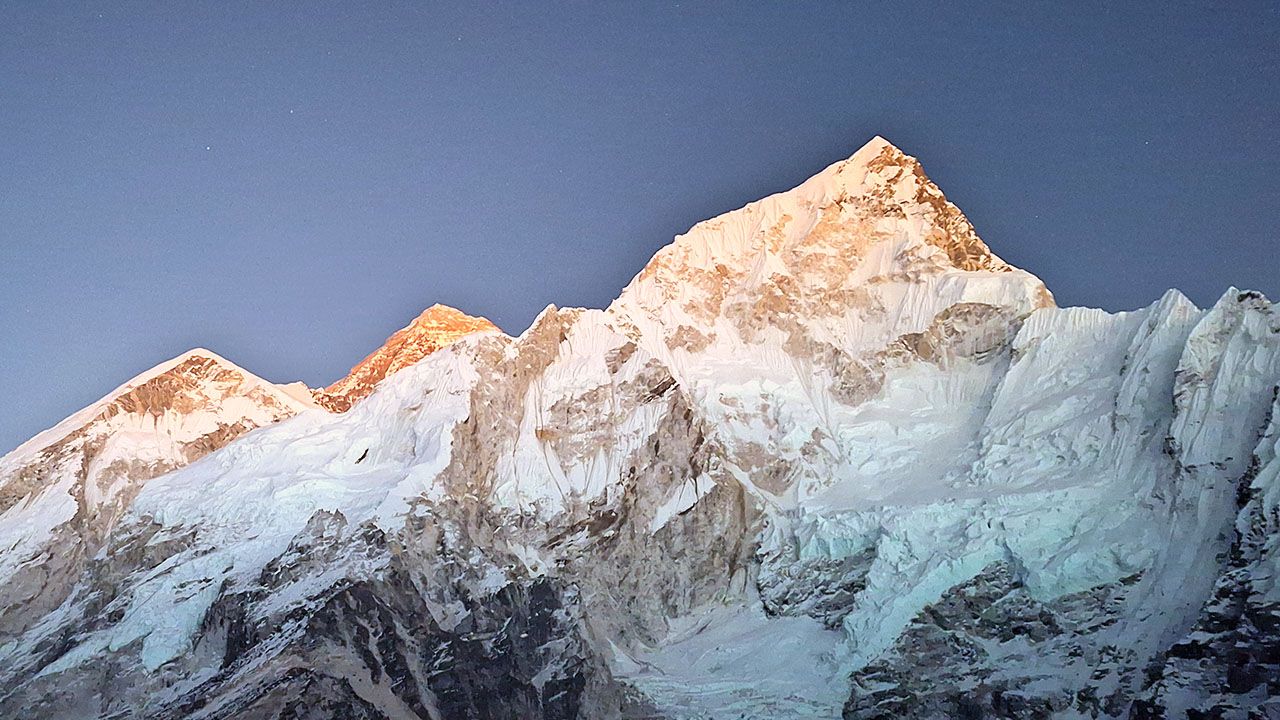
The Everest Base Camp Trek with Heli Return takes place in Nepal’s Khumbu region within Sagarmatha National Park over 14 days, starting in Kathmandu and culminating in a scenic helicopter flight back to Lukla and Kathmandu. Trekkers follow the legendary route through Sherpa hubs like Namche Bazaar and Tengboche, reaching a maximum altitude of 5,180 m at Gorak Shep and Everest Base Camp. Rated as moderate to strenuous, the journey balances steady acclimatisation with rich mountain culture, glacial terrain, and iconic views of Mount Everest before ending with an aerial retreat over the Khumbu Valley.
country
Country
NEPAL
region
Region
Everest Region
altitude
Max. Altitude
5,555m/ 18,225 ft
walking
Walking
5-6 hrs
accommodation
Accomodation
Hotel - Lodge- Tea Houses
meals
Meals
B - L - D
duration icon
duration14 DAYS
difficulty icon
difficultySTRENUOUS
seasons icon
seasonsSPRING/ AUTUMN
overview iconTRIP OVERVIEW

The Everest Base Camp Trek with Heli Return is an iconic high-altitude journey designed for adventurous travellers seeking a classic trek combined with comfort on the return leg.


Important Arrival and International Flight Requirements


  • Day 1 Arrival: Day 1 represents your official landing date in Kathmandu, Nepal.
  • International Airfare Exclusions: Travellers must book and pay for their own international flights to and from Tribhuvan International Airport (KTM) in Kathmandu. International airfare is not included in the package price.
  • Flexible Bookings: Return international flights should be scheduled with sufficient flexibility (preferably 24 to 48 hours after the trek finishes) to accommodate potential delays caused by mountain weather or domestic flight schedules. 
  • Travel Insurance Requirement: All participants must obtain comprehensive travel insurance prior to arrival. Policies must explicitly cover high-altitude trekking up to 5,500 m, emergency helicopter evacuation, medical treatment, and trip cancellation.


Journey Summary

After arriving in Kathmandu, Day 2 is reserved for trek preparation, gear inspections, and administrative briefings. The mountain trek begins with a flight to Lukla. From Lukla, the route follows the Dudh Koshi River into Sagarmatha National Park, passing through Monjo and ascending steep pine forests to Namche Bazaar (3,443 m). 


To ensure safe progression, structured acclimatisation days are integrated at Namche Bazaar and Dingboche (4,410 m). Trekkers traverse traditional Sherpa settlements, alpine valleys, and key cultural sites including the trail past Tengboche Monastery and Diboche (3,820 m). Beyond Dingboche, the landscape transitions into high alpine tundra, passing the Everest memorial site at Thokla Pass on the way to Lobuche (4,910 m) and Gorak Shep (5,180 m).


The physical culmination of the trek is the hike into Everest Base Camp, situated on the active Khumbu Glacier. On Day 12, instead of retracing the multiday walk back to Lukla, travellers board a helicopter for an aerial return flight to Lukla and onwards to Kathmandu, providing a smooth transition back to capital comfort. The trek is suitable for fit, well-prepared individuals capable of walking 3 to 8 hours daily over varied mountain terrain. The primary trekking seasons are Spring (March to May) and Autumn (September to November). 

overview iconITINERARY
Day
1
Arrival in Kathmandu
lodge icon5 Star
dinner iconDinner
altitude icon 1,400 m
hiking icon N/A
Upon arrival at Tribhuvan International Airport in Kathmandu, our representative meets you outside the arrivals terminal and transfers you to your 5-star hotel. Today is designated for resting after your international flight. In the evening, gather for a welcoming group dinner featuring authentic Nepali cuisine and an introductory briefing with your lead trekking guide.
Day
2
Preparation day in Kathmandu
lodge icon5 Star
dinner iconB - L - D
altitude icon1,400 m
hiking iconN/A
Dedicated to preparation and logistics. Your guide reviews gear requirements, issues group equipment, and conducts a final briefing regarding trail expectations and health protocols. You have free time to purchase or rental gear in Thamel if necessary. All official permits (Sagarmatha National Park entry and Khumbu Pasang Lhamu Rural Municipality permits) are finalized today.
Day
3
Fly to Lukla & Trek to Monjo
lodge iconStandard
dinner iconB - L - D
altitude icon2,835 m
hiking icon13 km/ 6 hrs
Transfer early to the airport for a short mountain flight to Lukla (2,860 m). (Note: During peak seasons, flights may operate via Ramechhap/Manthali Airport due to air traffic control, requiring a highway drive from Kathmandu). After meeting your porter team at Lukla, start the trek along the Dudh Koshi River valley. The trail descends past Phakding before continuing along undulating forest paths to Monjo, the gateway to Sagarmatha National Park. Elevation gain for the day is approximately +1,435 m across varied climbs and descents.
Day
4
Trek to Namche
lodge iconStandard
dinner iconB - L - D
altitude icon3,443 m
hiking icon5-6 km/ 3-4 hrs
Complete park registration details at the Monjo checkpoint before crossing suspension bridges over the Dudh Koshi River, including the famous Hillary Suspension Bridge. The path then ascends steadily through pine and fir forests up the steep Namche hill. This challenging climb gains over 600 m of vertical elevation. Mid-way up, weather permitting, catch your first view of Mount Everest. Arrive in Namche Bazaar, the primary trading hub of the Khumbu region, by early afternoon.
Day
5
Acclimatization & Rest Day in Namche
lodge iconStandard
dinner iconB - L - D
altitude icon3,443 m
hiking icon 2-3 hrs
Essential rest day to adapt to altitude above 3,000 m. Active acclimatisation is encouraged: take a short morning hike to the Sherpa Culture Museum or up to the Syangboche airstrip to help your body adapt ("climb high, sleep low"). Monitor your body for early symptoms of altitude adaptation. The afternoon is free to explore Namche’s bakeries, shops, and internet cafes.
Day
6
Trek to Everest View Hotel & Environs
lodge iconStandard
dinner iconB - L - D
altitude icon3,443 m
hiking icon3 km/ 2-3 hrs
Ascend out of the Namche bowl on a scenic trail toward the Everest View Hotel at 3,880 m. Gained elevation (+440 m) allows for further physiological adaptation while offering unobstructed vistas of Everest, Lhotse, Ama Dablam, and Thamserku. Enjoy tea or lunch on the terrace before descending back to your lodge or exploring the nearby traditional villages of Khumjung and Khunde.
Day
7
Trek to Diboche
lodge iconStandard
dinner iconB - L - D
altitude icon3,820 m
hiking icon10 km/ 6 hrs
Follow a winding contour trail high above the Imja Khola River with views of Ama Dablam ahead. The trail descends to the river crossing at Phunki Tenga (3,250 m) before initiating a sustained 2-hour uphill climb through rhododendron forests to Tengboche Monastery. Take time to visit the complex, the spiritual center of Khumbu Sherpas. From Tengboche, a short 20-minute descent leads down through birch woods to the quiet village of Diboche for the night.
Day
8
Trek to Dingboche
lodge iconStandard
dinner iconB - L - D
altitude icon4,410 m
hiking icon11 km/ 6 hrs
The path crosses the Imja Khola via a steel suspension bridge and climbs past ancient mani walls to Upper Pangboche. Notice the transition in vegetation as tree lines recede into alpine scrub and grasslands. Trek through Somare and enter the wide Imja Valley, dominated by views of Island Peak and the dramatic south face of Lhotse. Arrive in Dingboche by mid-afternoon after gaining 590 m of elevation.
Day
9
Acclimatization & Rest Day in Dingboche
lodge iconStandard
dinner iconB - L - D
altitude icon4,410 m
hiking icon5 km/ 5 hrs
A dedicated acclimatisation day before moving above 4,500 m. Guides lead an acclimatisation hike up Nagarjun Hill (Nangkartshang Peak) or toward Chhukung Valley, gaining up to 670 m of elevation. The vantage point provides panoramic views of Makalu, Lhotse, Ama Dablam, and Kantega. Descend back to Dingboche for lunch, hydration, and rest.
Day
10
Trek to Lobuche
lodge iconStandard
dinner iconB - L - D
altitude icon4,910 m
hiking icon8 km/ 6 hrs
Walk along the high alpine valley past Pheriche toward Thokla. Stop for rest before tackling the steep climb up Thokla Pass (4,830 m). At the crest of the pass, pass the stone memorials dedicated to climbers and Sherpas who lost their lives on Everest. The trail then levels out alongside the lateral moraine of the Khumbu Glacier, leading to the high-altitude settlement of Lobuche.
Day
11
Trek to Gorak Shep & Everest Base Camp
lodge iconBasic
dinner iconB - L - D
altitude icon5,180 m
hiking icon12 km/ 8 hrs
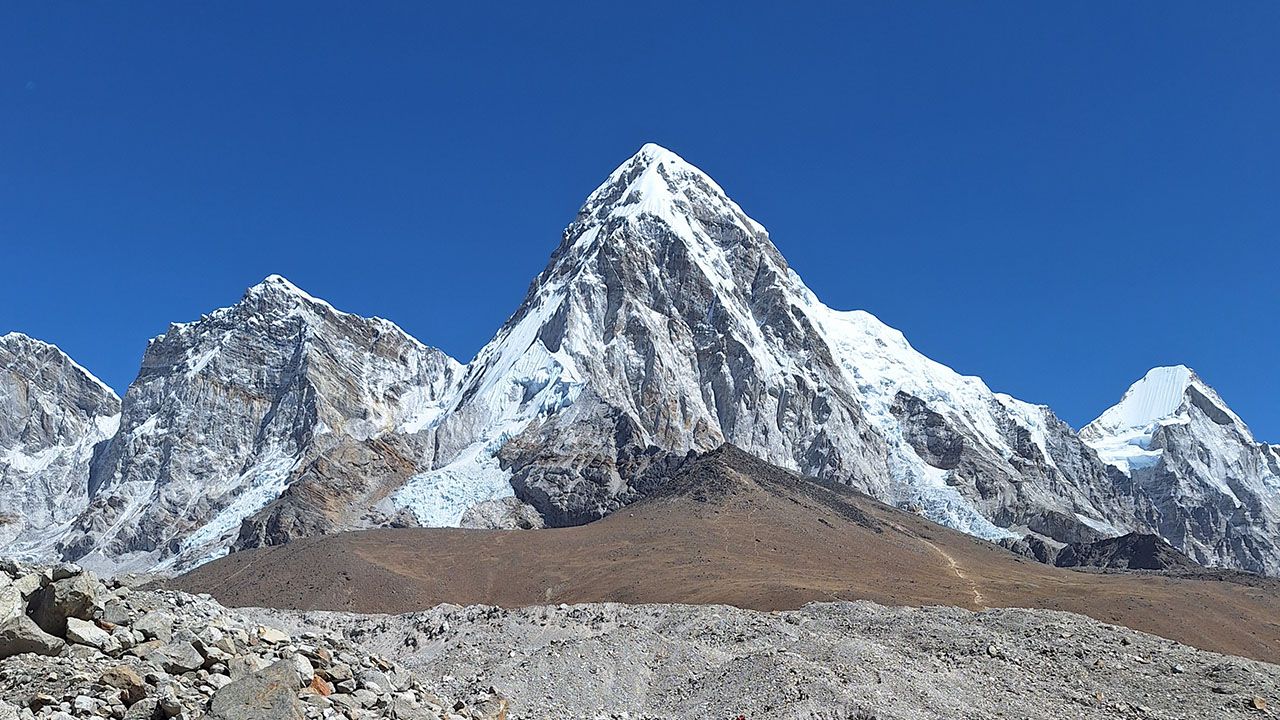
Depart early, walking along the rocky lateral moraine of the Khumbu Glacier to Gorak Shep, a original base camp location. Check into the basic teahouse, rest briefly, and continue across glacial debris to Everest Base Camp. Stand near the Khumbu Icefall and celebrate your goal before retracing your steps back to Gorak Shep for the night. Accommodation at this altitude is basic due to remote environmental conditions.
Day
12
Heli FLight to Lukla & Kathmandu
lodge icon5 Star
dinner iconB - L - D
altitude icon1,400 m
hiking icon -
Board a helicopter at Gorak Shep for a scenic return flight to Lukla and onwards to Kathmandu. Aerial routes provide final views over the Everest massif, Khumbu Glacier, and lower alpine valleys. Upon landing in Kathmandu, transfer back to your 5-star hotel. Spend the rest of the day showering, relaxing, and resting after high-altitude conditions.
Day
13
Rest & Free Day in Kathmandu
lodge icon5 Star
dinner iconB - L - D
altitude icon1,400 m
hiking icon -
Full buffer day in Kathmandu to account for any potential high-mountain weather delays during the trek. Optional sight-seeing can be arranged to UNESCO World Heritage Sites such as Pashupatinath, Boudhanath, or Swayambhunath, or enjoy rest and souvenir shopping in Thamel. A farewell dinner is hosted by Trekking Mate in the evening.
Day
14
Departure Home
lodge icon5 Star
dinner iconBreakfast
altitude icon -
hiking icon -
Enjoy breakfast at your hotel. At the appointed time (typically 3 hours prior to scheduled international departure), our vehicle transfers you to Tribhuvan International Airport for your flight home.
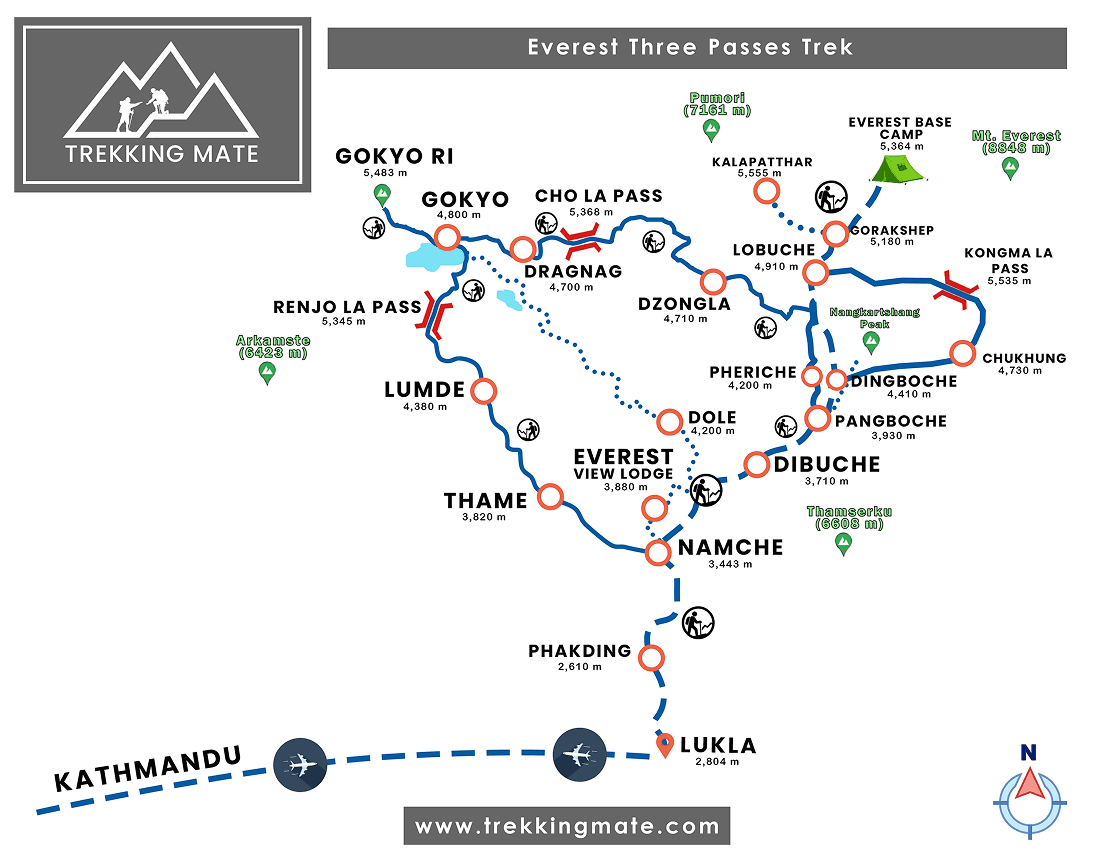
overview iconROUTE MAP
Everest_Three_Passes_Trek_d75cb50a98
includes iconINCLUDES
includes check icon
Airport Transfers - Private arrival and departure transfers between Tribhuvan International Airport and hotel.
includes check icon
Kathmandu Accommodation - 4 nights in a 5-star hotel in Kathmandu (twin-share basis) with breakfast included.
includes check icon
Trek Accommodation - 9 nights standard teahouse/lodge accommodation on trek (basic facilities at Gorak Shep).
includes check icon
Meals - Full meal board (Breakfast, Lunch, Dinner) throughout the 14-day itinerary, including welcoming and farewell dinners in Kathmandu.
includes check icon
Domestic Flights / Transport - Flight/transfer from Kathmandu/Ramechhap to Lukla; scheduled shared helicopter flight from Gorak Shep to Lukla and Kathmandu.
includes check icon
Permits & Registrations - Sagarmatha National Park entry permit, Khumbu Pasang Lhamu Rural Municipality entry fee, and TIMS card where applicable.
includes check icon
Guide Service - Government-licensed, English-speaking lead trekking guide throughout the journey.
overview iconEXCLUDES
includes check icon
International Flights - Travellers are responsible for booking and paying for their own international airfares to and from Kathmandu, Nepal.
includes check icon
Travel Insurance - Personal travel insurance policy covering medical treatment, cancellation, interruption, high-altitude trekking (up to 5,500 m), and emergency helicopter evacuation.
includes check icon
Nepal Tourist Visa - Entry visa fees payable upon arrival at Tribhuvan International Airport or online prior to travel.
includes check icon
Meals in Cities - Lunch & Dinner in Kathmandu (In case of early return from trek)
includes check icon
Personal Expenses - Bottled water, soft drinks, alcoholic beverages, snacks, hot showers, Wi-Fi fees, battery/device charging fees in teahouses, and laundry.
includes check icon
Personal Trekking Equipment - Boots, sleeping bags, down jackets, trekking poles, and personal clothing layers.
includes check icon
Staff Gratuities - Tips for lead guide, assistant guides, and porters (customary at the end of the trek).
overview iconIMPORTANT INFO.

Mountain weather in the Khumbu region varies significantly by season, elevation, and time of day.

  • Spring (March to May): Stable weather, clear mornings, and blooming rhododendron forests. Daytime temperatures range from 10°C to 15°C at moderate elevations, dropping below freezing (-5°C to -10°C) above 4,000 m.
  • Autumn (September to November): Crisp air, clear skies, and consistent mountain visibility. Daytime temperatures average 8°C to 12°C at lower elevations, while night temperatures at Gorak Shep can plummet to -15°C.
  • Monsoon (June to August): Heavy rainfall, clouds, leeches at lower elevations, and frequent flight disruptions. Trekking is generally not recommended.
  • Winter (December to February): Dry and clear, but daytime cold is severe (-15°C to -20°C at night at high altitudes), with heavy snow closing higher passes.

Note: Weather in high mountain valleys changes rapidly. Wind, unexpected snow, and afternoon clouds can arise regardless of seasonal averages, directly impacting visibility, walking conditions, and aviation operations.

Location

Accommodation Type

Facilities & Standards

Kathmandu

5-Star Luxury Hotel

Private en-suite bathrooms, heating/air-con, 24/7 hot water, Wi-Fi, restaurant, full amenities.

Lower Trek (Monjo, Namche)

Standard Teahouses / Lodges

Private twin-share rooms, shared or attached toilets, dining room heating, paid hot showers, paid Wi-Fi.

Mid Trek (Diboche, Dingboche)

Standard Teahouses / Lodges

Twin-share rooms, shared bathrooms, central stove heating in dining room, paid charging & Wi-Fi.

High Altitude (Lobuche, Gorak Shep)

Basic Teahouses

Simple twin-share rooms, basic shared squat/sit toilets, limited water, unheated bedrooms, reliance on solar/generator charging.

Food On Trek

Teahouse menus offer a combination of local, regional, and simple international dishes:

  • Nepali Staples: Dal Bhat (steamed rice, lentil soup, seasonal vegetable curry, and pickles)—nutritious, cooked fresh, and unlimited top-ups.
  • International Options: Fried rice, noodles, pasta, momos (dumplings), porridge, eggs, potatoes, and soups.
  • Dietary Needs: Vegetarian and vegan preferences are readily accommodated throughout the trail. Please inform us of severe food allergies during your Day 2 briefing. Meat options are available at lower elevations, but avoiding meat above Namche is advised due to transport chain limitations.

Drinking Water

  • Untreated tap water along the trail is not safe to drink.
  • Safe Water Practices: Bring reusable, insulated water bottles or bladders. Refill with boiled water purchased at teahouses, or treat stream/tap water using purification tablets, SteriPENs, or heavy-duty filtration systems.
  • To minimize plastic waste, purchasing single-use plastic water bottles is discouraged.


  • Licensed Leadership: Your lead guide holds official government certification, wilderness first-aid training, and years of high-altitude experience.
  • Health Monitoring: Daily health checks are conducted every evening using pulse oximeters to track heart rate and blood oxygen levels ($SpO_2$) alongside standard symptom checks.
  • Terrain Safety: Trails involve uneven terrain, steep steps, loose rock, and suspension bridges. Walk on the mountain side (inside edge) when yielding to yaks, mules, or porters.
  • Securing Valuables: Keep passports, travel documents, cash, and essential medication in your daypack at all times.
  • Risk Management: While strict protocols mitigate foreseeable hazards, mountain travel carries inherent environmental risks including rockfall, landslides, weather changes, and altitude-related illnesses.


  • National Language: Nepali is the official language across Nepal.
  • Local Language: Sherpa is spoken widely among indigenous communities in the Khumbu region.
  • English Proficiency: English is widely spoken by trekking guides, hotel staff, tea-house managers, and merchants along the primary Everest route.
  • Useful Expressions:
    • Namaste (Nam-as-tay): Hello / I bow to the divine in you.
    • Dhanyabad (Dhan-ya-baad): Thank you.
    • Mero naam... ho: My name is...
    • Tashi Delek: Sherpa / Tibetan blessing and greeting.

The Khumbu region is the ancestral homeland of the Sherpa people and holds deep sacred significance within Tibetan Buddhism.

  • Religious Sites: Pass mani stones (carved prayer stones), stupas, and prayer wheels on your left-hand side (clockwise direction).
  • Monasteries: Remove shoes and hats before entering monastery halls. Maintain silence and refrain from taking photos where signs forbid it.
  • Photography Etiquette: Always ask permission before photographing local residents, monks, or children.
  • Attire: Dress modestly. Avoid walking through villages in revealing athletic clothing.
  • Environmental Care: Carry out all non-biodegradable trash, avoid plastic bottles, and stay on designated paths to minimize erosion.

Expectation

Reality

Direct Kathmandu Flights

Peak season air traffic frequently redirects Lukla flights through Manthali/Ramechhap Airport, requiring a 4-hour highway drive departing Kathmandu at midnight.

Private Hotel Comforts

Teahouse rooms above 4,000 m are simple wood-paneled unheated rooms with shared toilet facilities; bedrooms stay cold at night.

Reliable High-Speed Internet

Wi-Fi is available via prepaid cards up to Gorak Shep, but speeds slow down significantly during peak hours or bad weather.

Piped Hot Showers Every Day

Hot showers are available for a fee at lower elevations, but become bucket-baths or unavailable at higher altitudes due to freezing conditions.

Predictable Daily Schedules

Mountain weather can delay flights or helicopter departures by hours or days; flexibility is a required mindset.

International Flights

  • International airfare is not included in the package cost.
  • Travellers must arrange their own arrival into Kathmandu on Day 1 and departure on Day 14.
  • Ensure your international travel coverage permits schedule changes if domestic weather causes delayed returns from the mountains.

Domestic Flights & Transfers

  • Fixed-Wing Flights: Scheduled STOL (Short Takeoff and Landing) aircraft fly between Kathmandu/Ramechhap and Lukla.
  • Seasonal Diversions: During high seasons (March–May & October–November), civil aviation authorities route Lukla flights via Ramechhap (Manthali Airport) to manage congestion. Overland transfers between Kathmandu and Ramechhap are provided by private vehicle.
  • Baggage Limits: Fixed-wing flights enforce a strict allowance of 15 kg per passenger total (10 kg hold duffel + 5 kg hand carry). Excess weight is subject to airline fees or exclusion.
  • Helicopter Segment: The return flight on Day 12 is operated by commercial helicopter from Gorak Shep to Lukla and Kathmandu. Helicopters carry up to 5 passengers depending on total payload weight and high-altitude weather limits. 


Acute Mountain Sickness (AMS) occurs when ascending faster than the human body can adapt to reduced atmospheric oxygen pressure. Fitness levels do not guarantee immunity.

  • Early Symptoms: Mild headache, fatigue, lightheadedness, loss of appetite, nausea, or disturbed sleep.
  • Severe Warning Signs (HAPE/HACE): Persistent vomiting, extreme breathlessness at rest, loss of physical coordination (ataxia), confusion, or severe chest tightness.
  • Prevention Strategies:
    • Pacing: Walk slowly (Bistari) without overexerting yourself.
    • Hydration: Drink 3 to 4 liters of fluid (water, herbal tea, clear soups) daily.
    • Avoid Alcohol: Refrain from consuming alcohol, tobacco, or sleeping pills above 3,000 m.
    • Acclimatisation Days: Utilize built-in rest days at Namche and Dingboche fully.
  • Protocol: Report any symptoms to your lead guide immediately. If symptoms worsen, the primary treatment is immediate descent to a lower elevation.

Emergency evacuations are coordinated by our Kathmandu operations hub in consultation with your lead guide and insurance provider.

  • Helicopter Evacuation: Helicopters can respond to life-threatening medical situations or severe AMS at designated high-altitude landing spots (e.g., Gorak Shep, Lobuche, Dingboche).
  • Operational Limits: Evacuations are never guaranteed. Flights depend strictly on daylight, mountain visibility, cloud cover, and high-altitude wind currents.
  • Financial Responsibility: Travellers are personally liable for all emergency rescue costs not pre-approved or directly paid by their travel insurance provider.
  • Required Coverage: Your insurance plan must explicitly cover helicopter search and rescue up to 5,500 m elevation without restrictive deductibles.
  • Duration: 14 Days
  • Trek Region: Khumbu / Everest Region, Sagarmatha National Park
  • Maximum Altitude: 5,364 m (17,598 ft) at Everest Base Camp / 5,180 m sleeping elevation at Gorak Shep
  • Difficulty: Moderate to Strenuous
  • Best Seasons: Spring (March – May) & Autumn (September – November)
  • Starting Point: Kathmandu (Fly/Drive to Lukla)
  • Ending Point: Kathmandu (Heli return from Gorak Shep via Lukla)
  • Average Walking Time: 4 – 7 hours per day (varies by terrain and elevation)
  • Accommodation: 5-Star Hotels (Kathmandu) / Teahouses & Mountain Lodges (Trek)
  • Meals: Full Board on Trek (Breakfast, Lunch, Dinner); Breakfast and select specialty dinners in Kathmandu
  • Guide: Included (Licensed English-speaking lead guide)
  • Porter: Included (1 porter per 2 trekkers, max weight allocation 10–12 kg per client)
  • International Flights: Not included (Travellers arrange independently)
  • Travel Insurance: Mandatory (Travellers arrange independently; must cover rescue up to 5,500 m)
  • Emergency Evacuation: Coordinated by Trekking Mate; paid/covered via client’s mandatory insurance policy
overview iconGEAR LIST
ITEMS
QUANTITY
REMARKS
No gear data available.
overview iconREVIEWS
adventurer_0210b0f7d9
Rishi U

Japan

I had an incredible experience trekking to Annapurna Base Camp with Subash. The journey was breathtaking, with mesmerizing views at every turn. Everything was exceptionally well-organized, making the trek smooth and enjoyable. I highly recommend their services to anyone looking for a well-planned and unforgettable adventure. I’m already looking forward to my next challenge—Everest Base Camp!

Exped_ac572680d1
Rakesh K

Nepal

Our trek to Annapurna Base Camp with Trekking Mate was an unforgettable experience! Everything was planned to perfection. The team’s dedication and attention to detail made sure we felt comfortable and well taken care of throughout the journey. Despite a packed schedule, everything ran smoothly, thanks to their expertise and careful planning. The breathtaking mountain scenery, combined with their exceptional service, made this adventure truly special. I’m already looking forward to my next trek with them. If you’re seeking a hassle-free, well-organized trekking experience with just the right amount of thrill, I highly recommend Trekking Mate!

adventurer_0210b0f7d9
Pramod D

Nepal

In October 2024, I embarked on the unforgettable Thorong La trek with Subash, who made the journey extraordinary. Starting from Manang, we ventured to the breathtaking Tilicho Lake, whose stunning blue waters nestled amidst towering peaks left me in awe. The trail to Tilicho was adventurous, and though challenging, every step was worth it. Subash, fresh from expeditions to Manaslu and Everest, was a pillar of support, sharing stories, guiding us through tricky sections, and keeping spirits high. After Tilicho, we headed to Yak Kharka, staying at the cosy Gangapurna Hotel. The food, especially dhido and gundruk, remains unforgettable. Finally, crossing Thorong La Pass at 5,416 meters was a moment of immense pride, rewarded with panoramic views. Thanks to Subash, this trek was smooth and memorable. It’s a challenging yet life-changing experience I’ll treasure forever.

adventurer_0210b0f7d9
John B

Nepal

I went with the most trusted mountain guide Subash. He was truly fantastic with his skill and guidance. The expedition was amazing cause i knew i was in safe hands of subash. He entertains, he manages, and he takes you all the way to your goal.

adventurer_0210b0f7d9
Suraj T

Nepal

Kalinchowk is truly a hidden gem. I had an unforgettable experience visiting this incredible destination with Sujan. The breathtaking views, the thrilling cable car ride, delicious food, and excellent accommodations made it a trip to remember. I highly recommend Kalinchowk for anyone looking to explore the scenic surroundings near Kathmandu, ascend to 3,842 meters, and soak in the panoramic beauty of the Annapurna and Mahalangur mountain ranges. Traveling with Sujan is always a rewarding experience. His deep knowledge of Nepal’s culture, history, religion, and geography adds immense value to every journey. Sujan ensures every detail is taken care of, leaving no room for complaints. I’m already looking forward to more tours and treks with him in the future!

Slide 6
Alexander

Nepal

It was a fantastic and unforgettable moment with the Trek Mate as well as Mr. Subash G. Trek Mate is one of the well-organised trekking companies with a well-experienced guide and friendly staff where you can find the best service. I am thankful to Trek Mate for the well-educated and experienced trekking and peak climbing guide, Mr. Subash G. I was on the Langtang Valley trek and peak climbing to the northern side from the Kathmandu Valley near the Tibet border. It was a 15-day trek altogether. Subash G was very much, frankly, well educated, experienced, and well known about the culture and lifestyle of the local people. And he was also a great climber who had already successfully summited the world's highest mountain, Mt. Everest, Mt. Manaslu, one of the technical mountains, and many smaller peaks in Nepal, and he was planning to go further more. I was very happy to have such a guide. Missing you guys a lot. Hope to see you soon in 2025. I highly recommend Trek Mate for your trek in Nepal for the first time as well as for more treks in Nepal.

adventurer_0210b0f7d9
Tikaram G

The UK

My trekking adventures to Annapurna Base Camp and Everest Base Camp with Trekking Mate Group were truly remarkable! The team made sure the journey was smooth and unforgettable from beginning to end. The journey's vitality was our guides, Mr. Subash and Mr. Arjun. The hikes were not only extremely enjoyable but also safe because of their professionalism, knowledge, and kind behaviours. They gave insightful information on the hikes, local culture, and mountains, which greatly enhanced the trip. With an organised itinerary, cosy lodgings, and delectable meals that kept us going throughout the journey, the organisation was flawless. At every stage, the team's commitment to client pleasure and safety was clear. I experienced total attention and support, even under challenging circumstances. Trekking Mate Group truly goes above and beyond to create memorable adventures. I highly recommend them to anyone looking for a reliable, professional, and friendly trekking company. Thank you, Mr. Subash, Mr. Arjun, and the entire team, for making my Himalayan dreams come true!

adventurer_0210b0f7d9
Bishal B

Malta

I am truly glad to have chosen Sujan as my guide for the Nepal City Tour. He is an incredible person who makes the journey both fun and memorable. His excellent attitude and warm demeanor enriched my experience, making the tour even more enjoyable.

adventurer_0210b0f7d9
Roshan C

Romania

I had an incredible experience exploring Pokhara, Kathmandu, Patan, and Bhaktapur. Everything was exceptionally well-organized, and my guide, Subash, was both highly professional and incredibly knowledgeable. His insights added immense value to the journey, making it even more enriching. I highly recommend this tour to anyone looking for a seamless and memorable experience.

Slide 10
Aayush H

Australia

Trekking Mate delivered an incredible trek to Haleshi Mahadev in Khotang District. The guides were not only knowledgeable but also passionate about the area, making every step of the journey enriching. From start to finish, their dedication to seamless logistics and showcasing the stunning landscapes made it an unforgettable adventure. Highly recommend for an authentic Nepalese trekking experience!

Slide 11
Yubraj U

Germany

We trekked with Trekking Mate up to the Annapurna Base Camp and it was just beautiful! Everything about the experience-from food and accommodation to itinerary-was very well organized. The team was warm, very keen to see us comfortable. Even in a busy trekking itinerary everything went perfectly, all because of their careful planning. The magnificently breathtaking views and the awesome service made this a journey of a lifetime. So to stir you off for that little beginning step toward the big adventure, here is a collection of some stills from the beautiful and gorgeous Annapurna Base Camp. Let the ethereal landscapes and imposing mountain peaks inspire your next trek! I'm already anxious to rendezvous with them again for adventures in future! Highly recommended for hassle-free trekking with a dash of thrill in the adventure.

Slide 12
Suraj C

Australia

Gosaikunda trek has been the most fulfilling adventure of my life, and I’m immensely grateful for this once-in-a-lifetime experience. The beautiful glacier lakes along the way to Gosaikunda Lake were truly enchanting, but the most awe-inspiring moment was reaching Gosaikunda Lake itself. Its serene beauty and spiritual energy felt deeply profound, as if it connected me to another dimension Thanks to Trekking Mate for making it all possible! Highly recommended.

faq icon
What is the time zone in Nepal?

Nepal Standard Time (NST) is GMT+5:45.
 

faq icon
Is Nepal safe for travelers and trekkers?

Yes, Nepal is generally safe for tourists. However, travelers should follow standard safety precautions, especially in remote trekking areas.
 

faq icon
Do I need a visa to travel to Nepal?

Yes, most foreign nationals require a visa to enter Nepal, which can be obtained on arrival at Tribhuvan International Airport or online beforehand.

FOLLOW US ON SOCIAL MEDIA
PARTNERS
Nepal Tourism Board
Nepal Tourism Board
Nepal Tourism Board