GOKYO RI TREK (GRT)
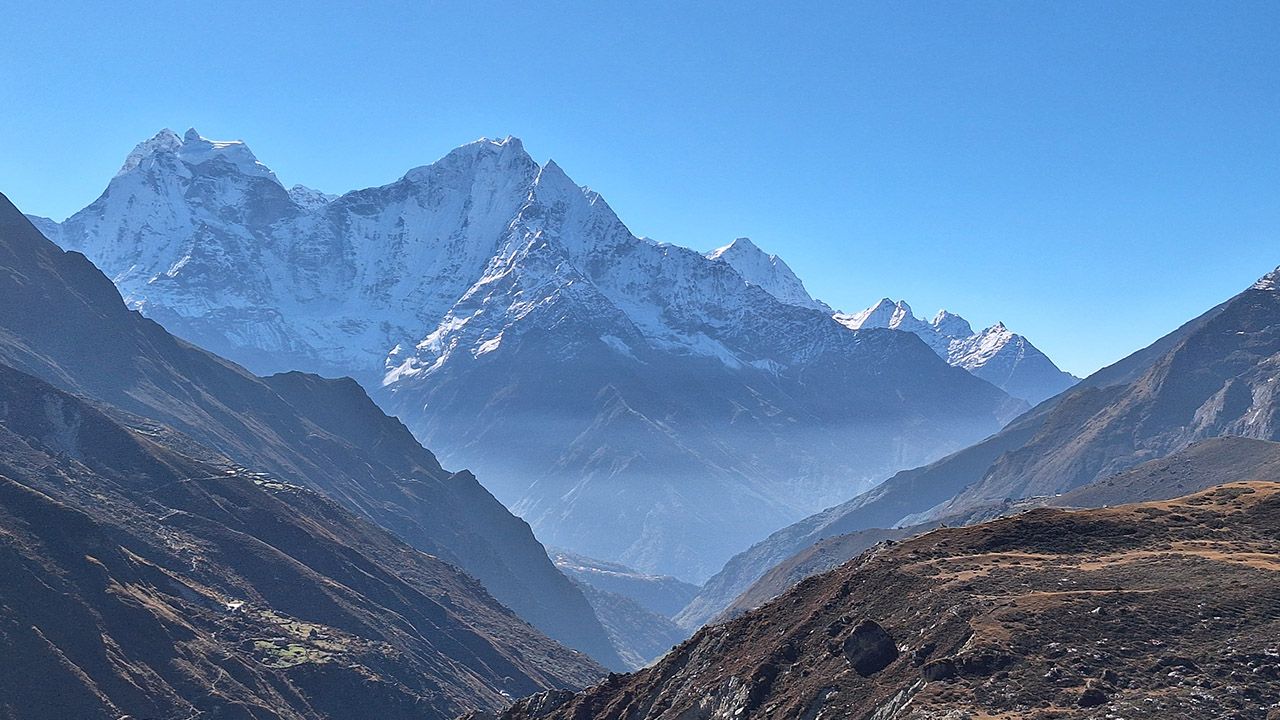
The Gokyo Lakes, Cho La Pass, and Everest Base Camp Trek is an epic Himalayan adventure through Sherpa villages and alpine valleys. Stunning glaciers and panoramic views of Everest, Cho Oyu, Lhotse, and Ama Dablam make this journey unforgettable.
country
Country
Nepal
region
Region
Everest Region
altitude
Max. Altitude
5,545 m / 18,192 ft
walking
Walking
5-6 hrs
accommodation
Accomodation
Hotel - Lodge - Tent
meals
Meals
B - L - D
duration icon
duration18 DAYS
difficulty icon
difficultySTRENUOUS
seasons icon
seasonsSPRING/ AUTUMN
overview iconTRIP OVERVIEW

The Gokyo Lakes & Everest Base Camp Trek is an extensive high-altitude journey across the Sagarmatha National Park in Nepal’s Khumbu region.


Important Arrival and International Flight Requirements


  • Day 1 Arrival: Day 1 represents your scheduled landing date in Kathmandu, Nepal.
  • International Airfare Exclusions: Travellers are responsible for booking and paying for their own international flights to and from Kathmandu (Tribhuvan International Airport). International airfare is not included in the package price.
  • Flight Flexibility: Return international flights should be booked with flexible date options (preferably allowing a 24- to 48-hour buffer) to accommodate potential mountain weather or domestic flight delays.
  • Travel Insurance Requirement: All participants must secure appropriate travel insurance prior to arrival. The policy must cover high-altitude trekking up to 5,500 m, emergency medical treatment, trip interruption, and helicopter evacuation.


Journey Summary


After arriving in Kathmandu on Day 1, travellers take a short domestic flight to Lukla on Day 2 to begin trekking toward Phakding and the Sherpa hub of Namche Bazaar (3,440 m). Following an essential acclimatisation day in Namche, the route veers north into the quieter Gokyo Valley rather than following the direct route to Everest.


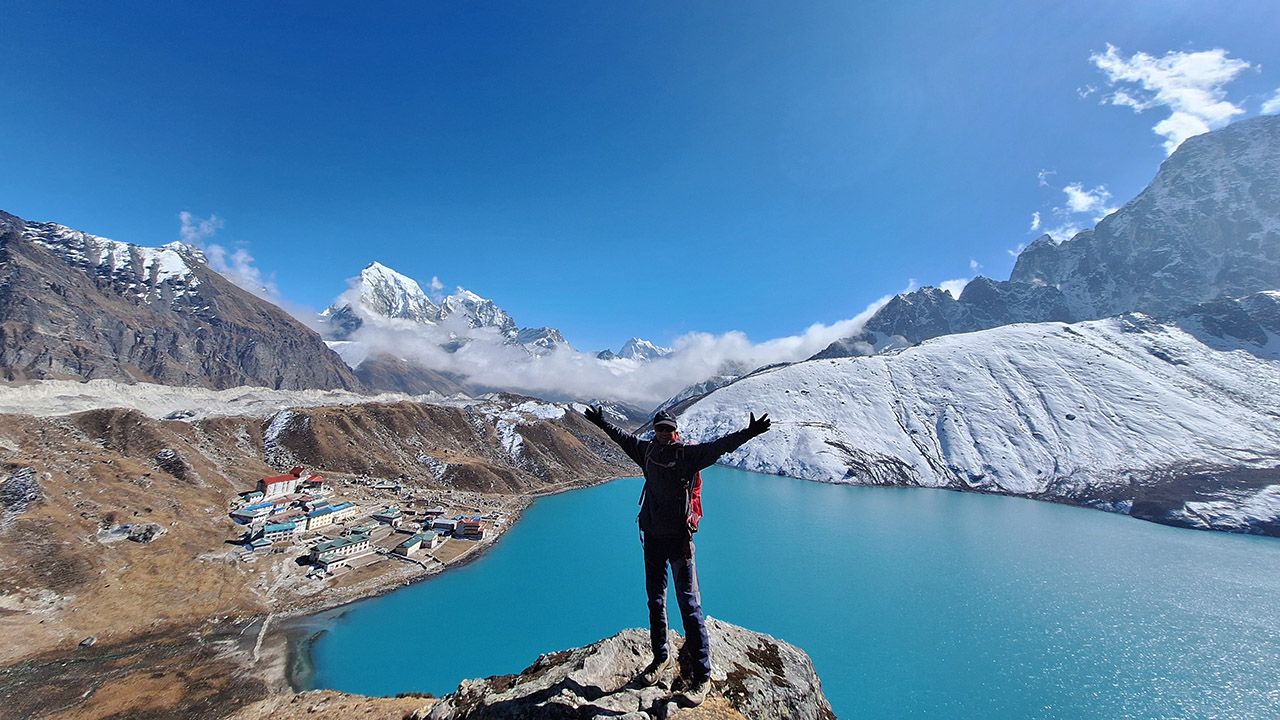
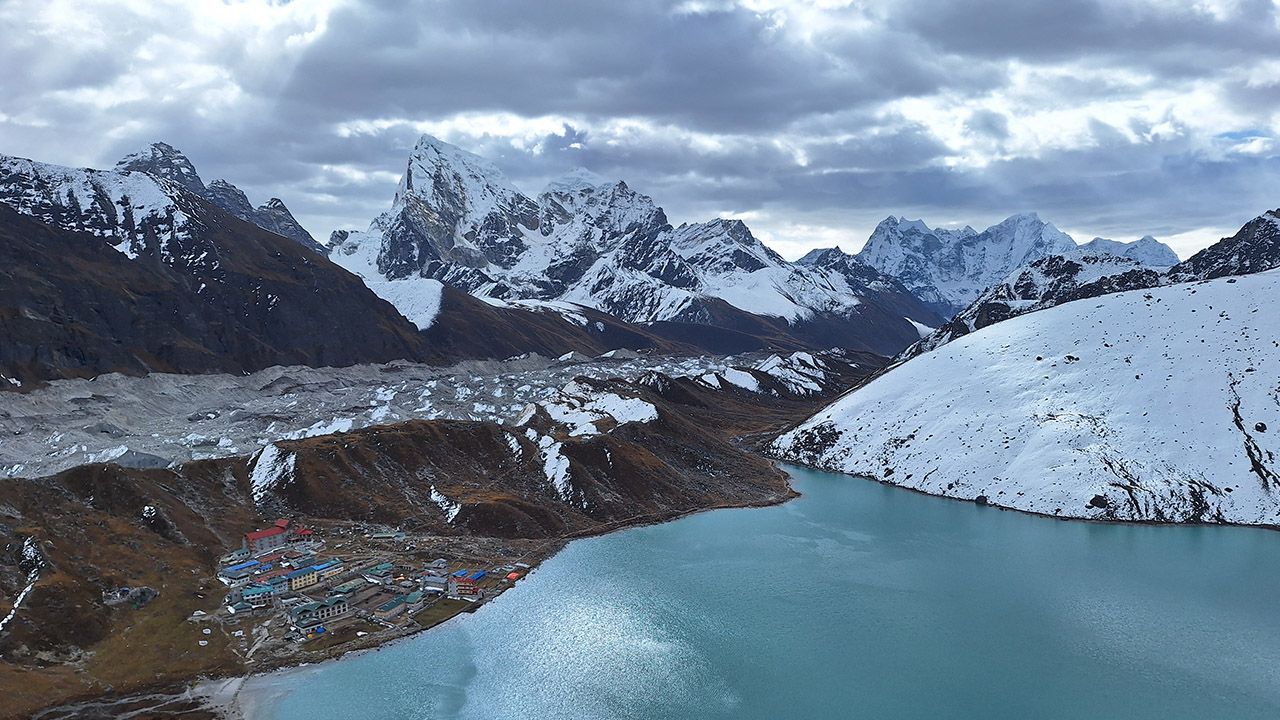
Passing through Dole and Machhermo, trekkers reach the turquoise glacial lakes of Gokyo (4,790 m) and summit Gokyo Ri (5,360 m) for views of Cho Oyu, Everest, Lhotse, and Makalu. The journey then crosses the glaciated Cho La Pass (4,830 m) to connect with the main Everest trail at Dzongla and Lobuche.


Trekkers proceed to Gorak Shep and Everest Base Camp (5,364 m), followed by an early climb up Kala Patthar (5,545 m) for views of Mount Everest. The return route descends through Pheriche, Namche Bazaar, and Lukla before flying back to Kathmandu. The trek is rated as strenuous, requiring solid physical endurance and careful altitude management. The primary trekking seasons are Spring (March to May) and Autumn (September to November).

overview iconITINERARY
Day
1
Arrival in Kathmandu (1,400 m)
lodge icon-
dinner icon-
altitude icon-
hiking icon-
Our team welcomes you at Tribhuvan International Airport and transfers you to your hotel. After check-in, you can rest or explore nearby streets. In the evening, we meet for a trek briefing to review the route, equipment, and safety guidelines before the adventure begins.
Day
2
Fly to Lukla & Trek to Phakding (2,610 m)
lodge icon-
dinner icon-
altitude icon-
hiking icon-
Enjoy a scenic mountain flight to Lukla, landing on one of the world’s most thrilling airstrips. Begin trekking through Sherpa villages, prayer wheels, and suspension bridges along the Dudh Koshi River, reaching the peaceful village of Phakding.
Day
3
Trek to Namche Bazaar (3,440 m)
lodge icon-
dinner icon-
altitude icon-
hiking icon-
The trail follows the Dudh Koshi River, crossing high suspension bridges and climbing through pine forests. After entering Sagarmatha National Park, a steep ascent brings your first glimpse of Everest before reaching the vibrant Sherpa capital, Namche Bazaar.
Day
4
Acclimatization Day in Namche Bazaar
lodge icon-
dinner icon-
altitude icon-
hiking icon-
To aid acclimatization, we hike to Everest View Hotel for panoramic views of Everest, Lhotse, and Ama Dablam. The afternoon is free to explore Namche’s markets, museums, and cafés while your body adapts to higher altitude.
Day
5
Trek to Dole (4,200 m)
lodge icon-
dinner icon-
altitude icon-
hiking icon-
Leaving the main EBC trail, we enter the quieter Gokyo Valley. The path climbs through rhododendron forests and yak pastures with stunning mountain views. The peaceful village of Dole offers a remote Himalayan atmosphere.
Day
6
Trek to Machhermo (4,470 m)
lodge icon-
dinner icon-
altitude icon-
hiking icon-
The trail continues above the tree line with wide valley views and increasing alpine scenery. We pass summer yak herder settlements before reaching Machhermo, a quiet village beneath towering peaks and glaciers.
Day
7
Trek to Gokyo (4,790 m)
lodge icon-
dinner icon-
altitude icon-
hiking icon-
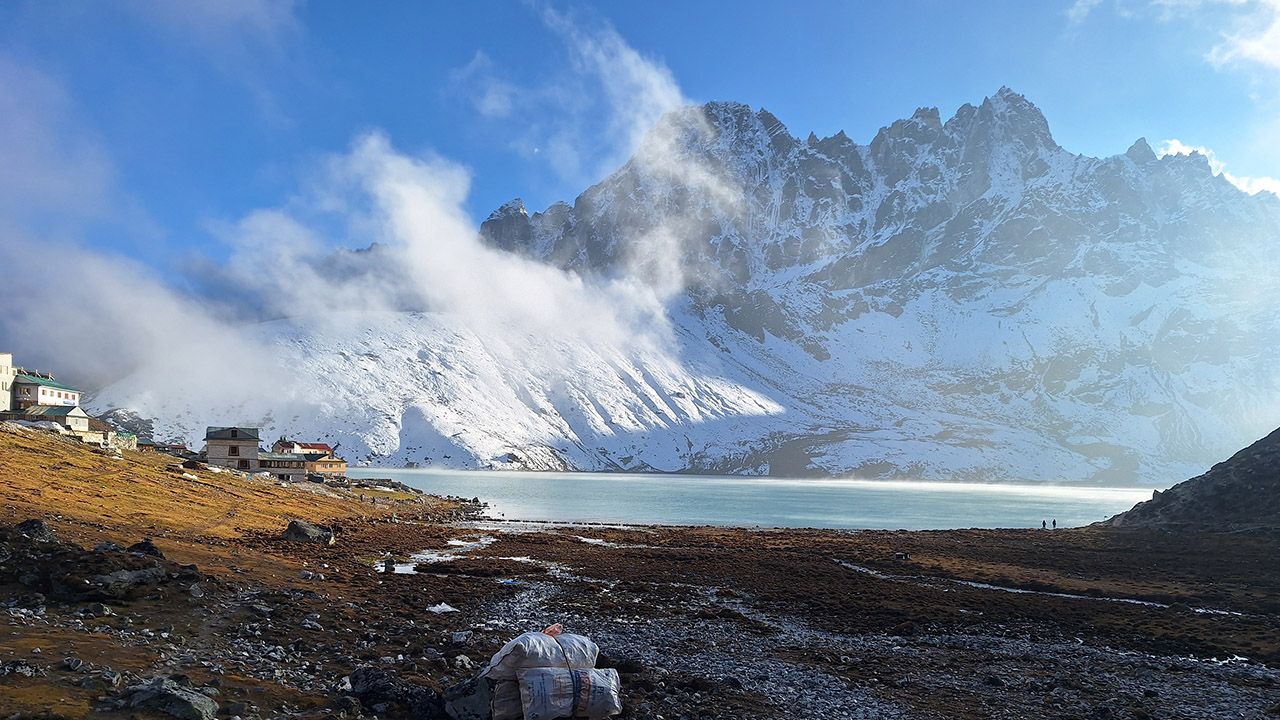
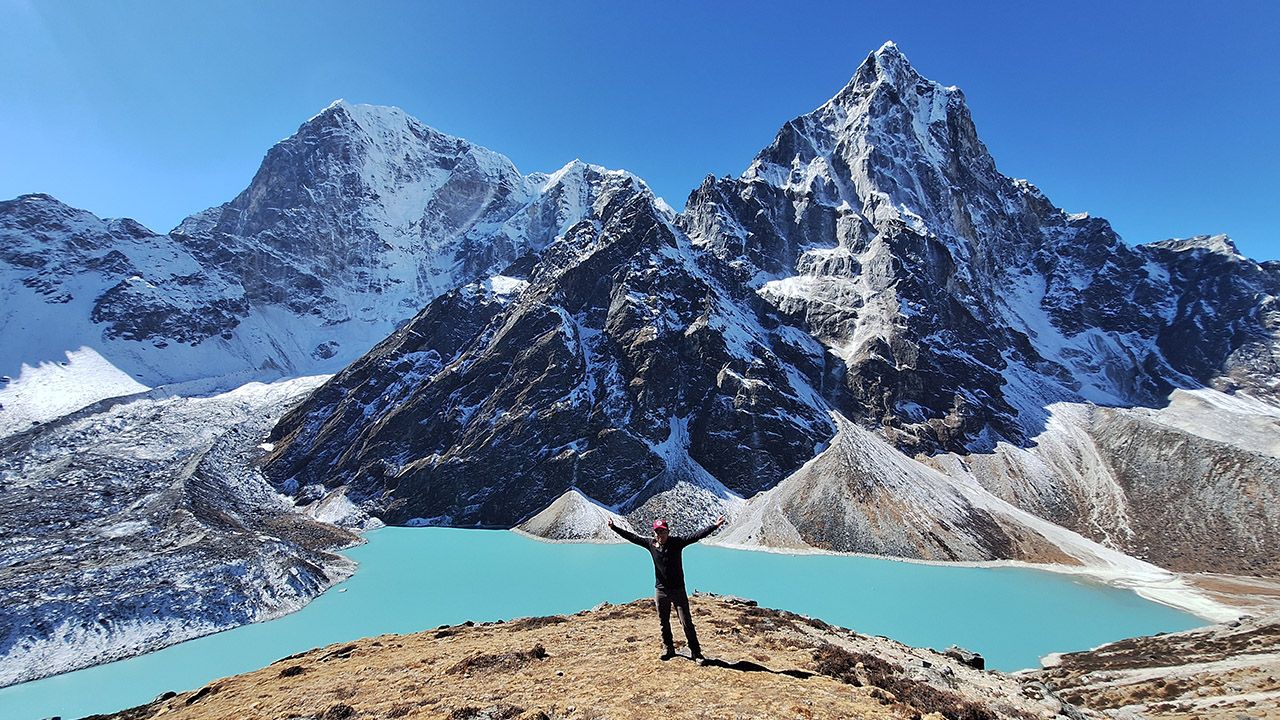
Today’s walk leads beside the vast Ngozumpa Glacier. As you approach Gokyo, brilliant turquoise lakes appear, set beneath snowy peaks. This stunning village is one of the most beautiful destinations in the Everest region.
Day
8
Hike to Gokyo Ri (5,360 m)
lodge icon-
dinner icon-
altitude icon-
hiking icon-
A pre-dawn climb to Gokyo Ri rewards you with breathtaking views of Everest, Lhotse, Makalu, and Cho Oyu. After descending, explore the sacred Gokyo Lakes and relax in this remarkable alpine setting.
Day
9
Trek to Thagnak (4,700 m)
lodge icon-
dinner icon-
altitude icon-
hiking icon-
Cross the rocky moraine of the Ngozumpa Glacier on a short but scenic walk. The trail offers dramatic glacier views before reaching Thagnak, a small settlement beneath the towering Cho La Pass.
Day
10
Cross Cho La Pass to Dzongla (4,830 m)
lodge icon-
dinner icon-
altitude icon-
hiking icon-
A challenging and rewarding day as you climb to Cho La Pass. Snowy slopes, glaciers, and towering peaks surround you. After crossing the pass, descend carefully to the village of Dzongla.
Day
11
Trek to Lobuche (4,910 m)
lodge icon-
dinner icon-
altitude icon-
hiking icon-
The trail follows a high ridge with magnificent views of Ama Dablam and surrounding peaks. We rejoin the main Everest Base Camp route and continue to Lobuche beside the Khumbu Glacier.
Day
12
Everest Base Camp & Gorak Shep (5,164 m)
lodge icon-
dinner icon-
altitude icon-
hiking icon-
Trek alongside the Khumbu Glacier to Everest Base Camp, standing beneath the world’s highest mountain. After exploring this legendary site, return to Gorak Shep for the night surrounded by towering ice walls.
Day
13
Kala Patthar & Trek to Pheriche (4,240 m)
lodge icon-
dinner icon-
altitude icon-
hiking icon-
Early morning climb to Kala Patthar for the best close-up view of Everest at sunrise. After descending, continue down the valley to Pheriche, enjoying warmer air and easier walking.
Day
14
Trek to Namche Bazaar (3,440 m)
lodge icon-
dinner icon-
altitude icon-
hiking icon-
Descend through alpine meadows and cross suspension bridges as you return to Namche Bazaar. The familiar village feels lively after days in remote high valleys.
Day
15
Trek to Lukla (2,804 m)
lodge icon-
dinner icon-
altitude icon-
hiking icon-
Your final trekking day follows the Dudh Koshi River through forests and villages. Reach Lukla by afternoon to celebrate the successful completion of your Himalayan adventure.
Day
16
Fly to Kathmandu (1,400 m)
lodge icon-
dinner icon-
altitude icon-
hiking icon-
Enjoy a scenic flight back to Kathmandu. Transfer to your hotel and relax after your trek.
Day
17
Leisure Day in Kathmandu
lodge icon-
dinner icon-
altitude icon-
hiking icon-
A free day to explore UNESCO heritage sites, shop in Thamel, or enjoy a spa treatment. A perfect day to reflect on your Himalayan journey.
Day
18
Final Departure
lodge icon-
dinner iconB
altitude icon-
hiking icon-
Enjoy breakfast at your hotel. Transfer by private vehicle to Tribhuvan International Airport three hours prior to your scheduled international flight home.
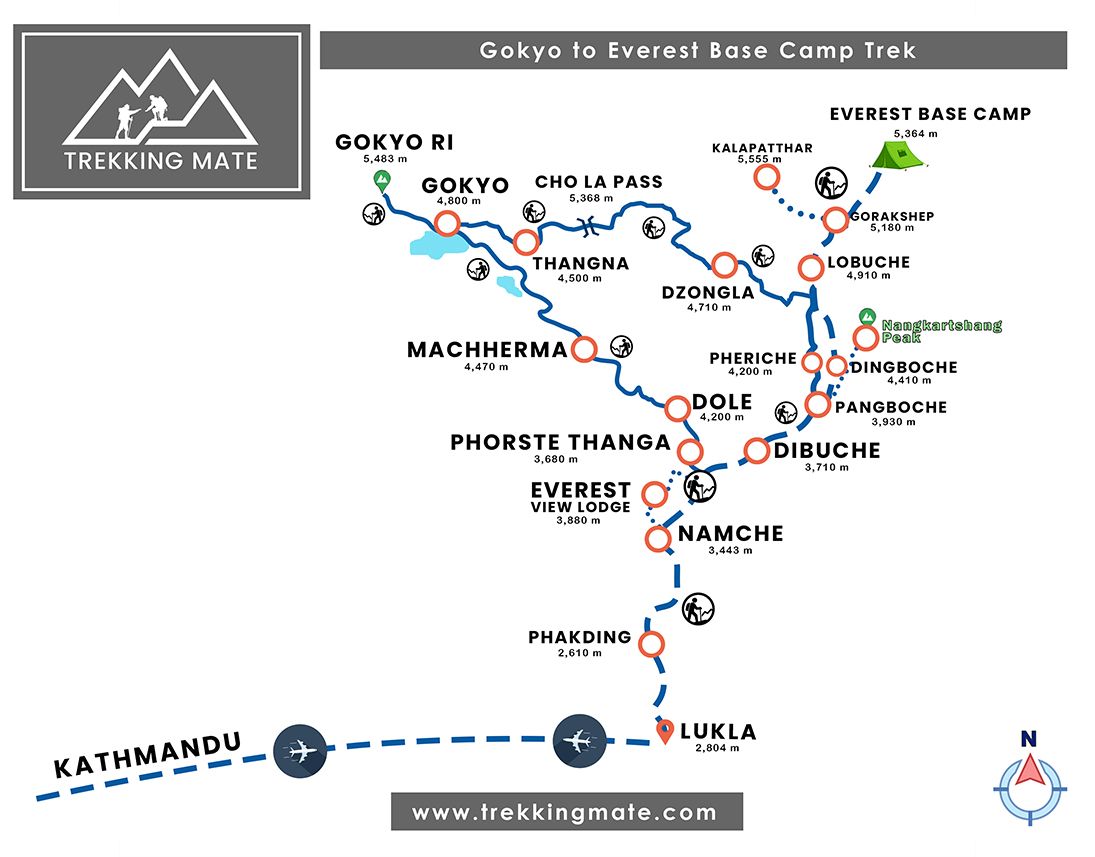
overview iconROUTE MAP
Gokyo_Ri_Map_300062f4f4
includes iconINCLUDES
includes check icon
Airport Transfers - Arrival and departure private transfers in Kathmandu.
includes check icon
Kathmandu Accommodation - 3 nights hotel accommodation in Kathmandu (twin-share) with breakfast included.
includes check icon
Trek Accommodation - 14 nights standard teahouse/lodge accommodation (basic at Gorak Shep).
includes check icon
Trek Meals - Full board meals (Breakfast, Lunch, Dinner) during the trekking days (Days 2–15).
includes check icon
Farewell Dinner - Group farewell dinner in Kathmandu on Day 17.
includes check icon
Domestic Flights - Scheduled return airfare for Kathmandu/Ramechhap ↔ Lukla.
includes check icon
Permits & Registration - Sagarmatha National Park entry permit and Khumbu Pasang Lhamu Rural Municipality entry permit.
overview iconEXCLUDES
includes check icon
International Flights - Travellers must book their own international airfares to and from Kathmandu.
includes check icon
Travel Insurance - Personal insurance covering high-altitude trekking up to 5,500 m, medical expenses, and emergency helicopter evacuation.
includes check icon
Nepal Visa Fees - Tourist entry visa fee payable on arrival at Kathmandu Airport ($50 USD for 30 days).
includes check icon
City Meals - Lunch and dinner in Kathmandu (except for the included farewell dinner).
includes check icon
Personal Expenses - Bottled water, soft drinks, alcohol, snacks, hot showers, Wi-Fi, device charging, and laundry in teahouses.
includes check icon
Personal Gear - Personal trekking boots, clothing, sleeping bags, and equipment.
includes check icon
Tipping - Gratuities for trekking guides, porters, and drivers.
overview iconIMPORTANT INFO.

Food On Trek

Teahouse menus offer a combination of local, regional, and simple international dishes:

  • Nepali Staples: Dal Bhat (steamed rice, lentil soup, seasonal vegetable curry, and pickles)—nutritious, cooked fresh, and unlimited top-ups.
  • International Options: Fried rice, noodles, pasta, momos (dumplings), porridge, eggs, potatoes, and soups.
  • Dietary Needs: Vegetarian and vegan preferences are readily accommodated throughout the trail. Please inform us of severe food allergies during your Day 2 briefing. Meat options are available at lower elevations, but avoiding meat above Namche is advised due to transport chain limitations.

Drinking Water

  • Untreated tap water along the trail is not safe to drink.
  • Safe Water Practices: Bring reusable, insulated water bottles or bladders. Refill with boiled water purchased at teahouses, or treat stream/tap water using purification tablets, SteriPENs, or heavy-duty filtration systems.
  • To minimize plastic waste, purchasing single-use plastic water bottles is discouraged.


  • Professional Leadership: Led by government-licensed, wilderness first-aid certified local guides.
  • Daily Health Checks: Guides monitor pulse rates and blood oxygen levels ($SpO_2$) every morning and evening using pulse oximeters.
  • Trail & Pass Safety: Cho La Pass and glacier crossings involve loose rock, steep scree, and ice. Microspikes may be required. Always follow your guide’s line.
  • Animal Traffic: Step to the cliff/inside side of the path when yielding to yaks or mule trains.
  • Valuables: Keep cash, passports, travel insurance documents, and essential medications in your daypack at all times.

High-altitude mountain weather in the Khumbu region changes quickly across elevation zones.

  • Spring (March to May): Moderate daytime temperatures (10°C to 15°C at lower elevations; -5°C to -10°C at night above 4,000 m). Clear mornings with afternoon clouds.
  • Autumn (September to November): Stable weather, clear skies, and cold nights (-10°C to -15°C above 4,000 m). Highly recommended season for mountain views.
  • Monsoon (June to August): Rain at lower elevations, clouds, leeches, and frequent flight delays at Lukla. Trekking is not recommended.
  • Winter (December to February): Dry and clear, but severe cold (-15°C to -20°C at high camps) and heavy snow that can close Cho La Pass.

Note: Rapid weather shifts, high winds, and unseasonal snow can occur at any time on high passes like Cho La.

Expectation

Reality

Direct Lukla Flights

Peak season air traffic frequently redirects Lukla flights via Ramechhap Airport, requiring a 4-hour night drive from Kathmandu.

Heated Bedrooms

Guest bedrooms in teahouses are unheated. Heat is only provided in the central dining hall during dinner hours.

Reliable Internet

Wi-Fi is available via prepaid cards, but connection speeds drop significantly during bad weather or peak hours.

Easy Pass Crossing

Cho La Pass involves steep, icy moraine and boulder fields; it demands good physical effort and steady footing.

Continuous Hot Showers

Hot showers are available for a fee at lower elevations, but become unavailable or bucket-baths at higher altitudes.

International Flights

  • International airfare is not included in the package price.
  • Travellers must arrange flights arriving on Day 1 and departing on Day 18.

Domestic Flights & Transfers

  • Fixed-Wing Aircraft: Twin-otter flights connect Kathmandu/Ramechhap with Lukla (~40 minutes).
  • Seasonal Ramechhap Diversions: Civil Aviation authorities may reroute Lukla flights through Ramechhap (Manthali Airport) during peak seasons to manage air traffic congestion.
  • Baggage Allowance: Domestic flights strictly enforce a maximum baggage limit of 15 kg per passenger (10 kg hold duffel + 5 kg hand carry).


  • Coordination: Rescues are coordinated by Trekking Mate's operations center in Kathmandu in direct communication with your guide.
  • Helicopter Evacuation: Emergency helicopters can land at designated spots (including Gokyo, Dzongla, Lobuche, and Gorak Shep) when weather conditions permit.
  • Operational Limits: Evacuations are never guaranteed and depend entirely on weather, daylight, cloud cover, and aviation safety rules.
  • Financial Obligation: Travellers must hold personal travel insurance covering emergency helicopter evacuation up to 5,500 m. Any uncovered costs remain the traveller's responsibility.

Arranged by Trekking Mate:

  • Sagarmatha National Park Entry Permit.
  • Khumbu Pasang Lhamu Rural Municipality Entry Permit.
  • TIMS Registration Card (where applicable).

Arranged by Traveller:

  • Valid Passport: Must have at least 6 months of validity remaining from your return date.
  • Nepal Tourist Visa: Obtained on arrival at Kathmandu Airport or applied for online prior to travel.
  • Passport Photographs: Carry 4 printed passport-size photos for local permits and visa processing.
  • Document Copies: Paper copies of your passport, visa, travel insurance policy, and emergency contact details.

Travel insurance is not included in the package price. All trekkers must arrange their own policy prior to travel.

Ensure your insurance policy explicitly covers:

  • High-altitude trekking up to 5,600 m.
  • Emergency medical expenses and hospitalisation.
  • Emergency helicopter evacuation.
  • Trip cancellation, interruption, and travel delays.
  • Lost or delayed baggage.

Review all policy exclusions and altitude caps carefully before departure.

The Gokyo Lakes, Cho La Pass & EBC Trek is rated strenuous.

  • Cardiovascular & Endurance: Focus training on cardiovascular health (running, cycling, swimming) and long-distance walking 2–3 months prior to departure.
  • Uphill & Downhill Legs: Incorporate stair climbing or hill walking while carrying a weighted daypack (5–8 kg).
  • Walking Days: Expect to walk 5 to 8 hours daily over uneven terrain, glacial moraine, steep scree, and icy steps.
  • Mental Preparation: Prepare for cold sleeping conditions, basic sanitation facilities, and changing mountain weather.

    Note: Physical fitness improves your stamina but does not prevent altitude sickness.

Clothing

  • Base Layers: Thermal tops and bottoms (merino wool or synthetic).
  • Trekking Tops: Light moisture-wicking short and long-sleeve shirts.
  • Fleece / Warm Layer: Mid-weight fleece jacket or pullover.
  • Insulated Jacket: Down jacket (rated for -10°C to -15°C).
  • Outer Shell: Waterproof and windproof jacket and trousers (Gore-Tex or similar).
  • Trekking Trousers: Breathable trekking pants (convertible pants optional).
  • Accessories: Warm beanie, sun hat, lightweight gloves, heavy insulated gloves/mittens, buff/neck gaiter.

Footwear

  • Trekking Boots: Sturdy, broken-in, waterproof high-top hiking boots.
  • Camp Shoes: Light trainers or sandals for teahouse evenings.
  • Socks: 4–5 pairs of merino wool trekking socks and liner socks.

Personal Equipment

  • Daypack: 30L–40L daypack with rain cover (for carrying water, camera, layers, and personal items).
  • Main Duffel Bag: Sturdy 80L–100L duffel bag (carried by porters; max weight 10–12 kg).
  • Sleeping Bag: 4-season sleeping bag (rated to -15°C).
  • Trekking Gear: Adjustable trekking poles, headlamp with extra batteries, UV sunglasses (Category 3/4), 2x 1L water bottles or insulated flask, microspikes/crampons for Cho La Pass.

Health & Electronics

  • Personal first-aid kit, blister plasters, personal medications, Diamondox (if prescribed).
  • Sunscreen (SPF 50+), lip balm with SPF, hand sanitiser, wet wipes.
  • Power bank (10,000–20,000 mAh), spare camera batteries, universal adapter.


  • Hand Hygiene: Wash hands frequently with soap or use alcohol-based hand sanitiser before meals and after using toilets.
  • Safe Water: Drink only treated or boiled water; avoid untreated tap water.
  • Food Safety: Eat hot, freshly cooked meals; avoid unwashed raw vegetables or unpeeled fruit on the trail.
  • High-Altitude Hygiene: Toilet facilities become more basic at higher elevations. Carry personal toilet paper, wet wipes, and sanitary disposal bags.
  • Sun Protection: High altitudes increase UV exposure. Reapply SPF 50+ sunscreen and wear sunglasses daily.
  • Medical Consultations: Consult your doctor or travel health clinic before departure regarding vaccinations and high-altitude medication.

Environmental Responsibility

  • Leave No Trace: Carry out all personal non-biodegradable trash (snack wrappers, batteries, hygiene products).
  • Reduce Single-Use Plastics: Refill reusable bottles or bladders using water purification tablets or boiled water rather than buying plastic bottles.
  • Resource Conservation: Use electricity and hot water sparingly in high-altitude teahouses.
  • Trail Preservation: Stay on marked paths to prevent soil erosion and avoid disturbing wildlife.

Responsible Tourism

  • Cultural Respect: Dress modestly when passing through local villages and monasteries.
  • Support Local Economy: Purchase local handicrafts and services directly from village vendors.
  • Fair Staff Treatment: We ensure fair wages, proper insurance, warm clothing, and weight limits for all our guides and porters. Treat all trekking crew with respect.


Location

Accommodation Type

Facilities & Standards

Kathmandu

City Hotel

Private en-suite, 24/7 hot water, Wi-Fi, heating/AC, restaurant facilities.

Lower Trek (Phakding, Namche)

Standard Teahouse

Private twin-share rooms, shared or attached toilets, central dining heating, paid hot showers/Wi-Fi.

Mid Trek (Dole, Machhermo, Gokyo, Pheriche)

Standard Teahouse

Simple twin rooms, shared bathroom facilities, stove-heated dining hall, paid charging & Wi-Fi.

High Camps (Thagnak, Dzongla, Gorak Shep)

Basic Teahouse

Very basic unheated twin rooms, shared squat/sit toilets, limited water, basic dining area.

  • National Language: Nepali is the official language across Nepal.
  • Local Language: Sherpa is spoken widely among indigenous communities in the Khumbu region.
  • English Proficiency: English is widely spoken by trekking guides, hotel staff, tea-house managers, and merchants along the primary Everest route.
  • Useful Expressions:
    • Namaste (Nam-as-tay): Hello / I bow to the divine in you.
    • Dhanyabad (Dhan-ya-baad): Thank you.
    • Mero naam... ho: My name is...
    • Tashi Delek: Sherpa / Tibetan blessing and greeting.

The Khumbu region is the ancestral homeland of the Sherpa people and holds deep sacred significance within Tibetan Buddhism.

  • Religious Sites: Pass mani stones (carved prayer stones), stupas, and prayer wheels on your left-hand side (clockwise direction).
  • Monasteries: Remove shoes and hats before entering monastery halls. Maintain silence and refrain from taking photos where signs forbid it.
  • Photography Etiquette: Always ask permission before photographing local residents, monks, or children.
  • Attire: Dress modestly. Avoid walking through villages in revealing athletic clothing.
  • Environmental Care: Carry out all non-biodegradable trash, avoid plastic bottles, and stay on designated paths to minimize erosion.

Acute Mountain Sickness (AMS) occurs when ascending faster than the human body can adapt to reduced atmospheric oxygen pressure. Fitness levels do not guarantee immunity.

  • Early Symptoms: Mild headache, fatigue, lightheadedness, loss of appetite, nausea, or disturbed sleep.
  • Severe Warning Signs (HAPE/HACE): Persistent vomiting, extreme breathlessness at rest, loss of physical coordination (ataxia), confusion, or severe chest tightness.
  • Prevention Strategies:
    • Pacing: Walk slowly (Bistari) without overexerting yourself.
    • Hydration: Drink 3 to 4 liters of fluid (water, herbal tea, clear soups) daily.
    • Avoid Alcohol: Refrain from consuming alcohol, tobacco, or sleeping pills above 3,000 m.
    • Acclimatisation Days: Utilize built-in rest days at Namche and Dingboche fully.
  • Protocol: Report any symptoms to your lead guide immediately. If symptoms worsen, the primary treatment is immediate descent to a lower elevation.
  • Duration: 18 days
  • Trek Region: Khumbu / Everest Region, Sagarmatha National Park
  • Maximum Altitude: 5,545 m / 18,192 ft (Kala Patthar) / 5,360 m (Gokyo Ri)
  • Difficulty: Strenuous
  • Best Seasons: Spring (March–May) & Autumn (September–November)
  • Starting Point: Kathmandu (Fly to Lukla)
  • Ending Point: Kathmandu (Fly from Lukla)
  • Average Walking Time: 5–8 hours per day
  • Accommodation: City Hotels (Kathmandu) & Teahouses/Lodges (Trek)
  • Meals: Breakfast in Kathmandu; Breakfast, Lunch & Dinner on trek
  • Guide: Yes (Licensed English-speaking guide)
  • Porter: Yes (1 porter per 2 trekkers, max allocation 10–12 kg per trekker)
  • International Flights: Not included
  • Travel Insurance: Not included; traveller to arrange
  • Emergency Evacuation: Subject to policy coverage (Client insurance required)
overview iconGEAR LIST
ITEMS
QUANTITY
REMARKS
No gear data available.
overview iconREVIEWS
adventurer_0210b0f7d9
Rishi U

Japan

I had an incredible experience trekking to Annapurna Base Camp with Subash. The journey was breathtaking, with mesmerizing views at every turn. Everything was exceptionally well-organized, making the trek smooth and enjoyable. I highly recommend their services to anyone looking for a well-planned and unforgettable adventure. I’m already looking forward to my next challenge—Everest Base Camp!

Exped_ac572680d1
Rakesh K

Nepal

Our trek to Annapurna Base Camp with Trekking Mate was an unforgettable experience! Everything was planned to perfection. The team’s dedication and attention to detail made sure we felt comfortable and well taken care of throughout the journey. Despite a packed schedule, everything ran smoothly, thanks to their expertise and careful planning. The breathtaking mountain scenery, combined with their exceptional service, made this adventure truly special. I’m already looking forward to my next trek with them. If you’re seeking a hassle-free, well-organized trekking experience with just the right amount of thrill, I highly recommend Trekking Mate!

adventurer_0210b0f7d9
Pramod D

Nepal

In October 2024, I embarked on the unforgettable Thorong La trek with Subash, who made the journey extraordinary. Starting from Manang, we ventured to the breathtaking Tilicho Lake, whose stunning blue waters nestled amidst towering peaks left me in awe. The trail to Tilicho was adventurous, and though challenging, every step was worth it. Subash, fresh from expeditions to Manaslu and Everest, was a pillar of support, sharing stories, guiding us through tricky sections, and keeping spirits high. After Tilicho, we headed to Yak Kharka, staying at the cosy Gangapurna Hotel. The food, especially dhido and gundruk, remains unforgettable. Finally, crossing Thorong La Pass at 5,416 meters was a moment of immense pride, rewarded with panoramic views. Thanks to Subash, this trek was smooth and memorable. It’s a challenging yet life-changing experience I’ll treasure forever.

adventurer_0210b0f7d9
John B

Nepal

I went with the most trusted mountain guide Subash. He was truly fantastic with his skill and guidance. The expedition was amazing cause i knew i was in safe hands of subash. He entertains, he manages, and he takes you all the way to your goal.

adventurer_0210b0f7d9
Suraj T

Nepal

Kalinchowk is truly a hidden gem. I had an unforgettable experience visiting this incredible destination with Sujan. The breathtaking views, the thrilling cable car ride, delicious food, and excellent accommodations made it a trip to remember. I highly recommend Kalinchowk for anyone looking to explore the scenic surroundings near Kathmandu, ascend to 3,842 meters, and soak in the panoramic beauty of the Annapurna and Mahalangur mountain ranges. Traveling with Sujan is always a rewarding experience. His deep knowledge of Nepal’s culture, history, religion, and geography adds immense value to every journey. Sujan ensures every detail is taken care of, leaving no room for complaints. I’m already looking forward to more tours and treks with him in the future!

Slide 6
Alexander

Nepal

It was a fantastic and unforgettable moment with the Trek Mate as well as Mr. Subash G. Trek Mate is one of the well-organised trekking companies with a well-experienced guide and friendly staff where you can find the best service. I am thankful to Trek Mate for the well-educated and experienced trekking and peak climbing guide, Mr. Subash G. I was on the Langtang Valley trek and peak climbing to the northern side from the Kathmandu Valley near the Tibet border. It was a 15-day trek altogether. Subash G was very much, frankly, well educated, experienced, and well known about the culture and lifestyle of the local people. And he was also a great climber who had already successfully summited the world's highest mountain, Mt. Everest, Mt. Manaslu, one of the technical mountains, and many smaller peaks in Nepal, and he was planning to go further more. I was very happy to have such a guide. Missing you guys a lot. Hope to see you soon in 2025. I highly recommend Trek Mate for your trek in Nepal for the first time as well as for more treks in Nepal.

adventurer_0210b0f7d9
Tikaram G

The UK

My trekking adventures to Annapurna Base Camp and Everest Base Camp with Trekking Mate Group were truly remarkable! The team made sure the journey was smooth and unforgettable from beginning to end. The journey's vitality was our guides, Mr. Subash and Mr. Arjun. The hikes were not only extremely enjoyable but also safe because of their professionalism, knowledge, and kind behaviours. They gave insightful information on the hikes, local culture, and mountains, which greatly enhanced the trip. With an organised itinerary, cosy lodgings, and delectable meals that kept us going throughout the journey, the organisation was flawless. At every stage, the team's commitment to client pleasure and safety was clear. I experienced total attention and support, even under challenging circumstances. Trekking Mate Group truly goes above and beyond to create memorable adventures. I highly recommend them to anyone looking for a reliable, professional, and friendly trekking company. Thank you, Mr. Subash, Mr. Arjun, and the entire team, for making my Himalayan dreams come true!

adventurer_0210b0f7d9
Bishal B

Malta

I am truly glad to have chosen Sujan as my guide for the Nepal City Tour. He is an incredible person who makes the journey both fun and memorable. His excellent attitude and warm demeanor enriched my experience, making the tour even more enjoyable.

adventurer_0210b0f7d9
Roshan C

Romania

I had an incredible experience exploring Pokhara, Kathmandu, Patan, and Bhaktapur. Everything was exceptionally well-organized, and my guide, Subash, was both highly professional and incredibly knowledgeable. His insights added immense value to the journey, making it even more enriching. I highly recommend this tour to anyone looking for a seamless and memorable experience.

Slide 10
Aayush H

Australia

Trekking Mate delivered an incredible trek to Haleshi Mahadev in Khotang District. The guides were not only knowledgeable but also passionate about the area, making every step of the journey enriching. From start to finish, their dedication to seamless logistics and showcasing the stunning landscapes made it an unforgettable adventure. Highly recommend for an authentic Nepalese trekking experience!

Slide 11
Yubraj U

Germany

We trekked with Trekking Mate up to the Annapurna Base Camp and it was just beautiful! Everything about the experience-from food and accommodation to itinerary-was very well organized. The team was warm, very keen to see us comfortable. Even in a busy trekking itinerary everything went perfectly, all because of their careful planning. The magnificently breathtaking views and the awesome service made this a journey of a lifetime. So to stir you off for that little beginning step toward the big adventure, here is a collection of some stills from the beautiful and gorgeous Annapurna Base Camp. Let the ethereal landscapes and imposing mountain peaks inspire your next trek! I'm already anxious to rendezvous with them again for adventures in future! Highly recommended for hassle-free trekking with a dash of thrill in the adventure.

Slide 12
Suraj C

Australia

Gosaikunda trek has been the most fulfilling adventure of my life, and I’m immensely grateful for this once-in-a-lifetime experience. The beautiful glacier lakes along the way to Gosaikunda Lake were truly enchanting, but the most awe-inspiring moment was reaching Gosaikunda Lake itself. Its serene beauty and spiritual energy felt deeply profound, as if it connected me to another dimension Thanks to Trekking Mate for making it all possible! Highly recommended.

FOLLOW US ON SOCIAL MEDIA
PARTNERS
Nepal Tourism Board
Nepal Tourism Board
Nepal Tourism Board